Munich, April 2015
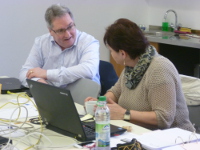
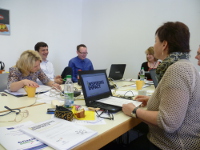
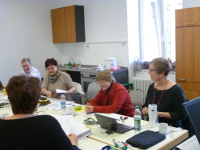
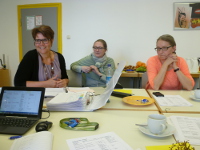
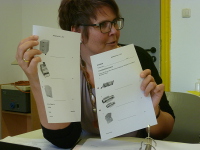
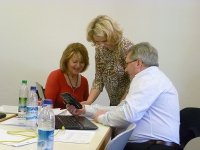
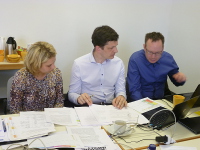
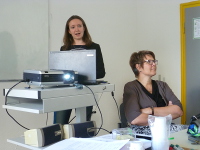
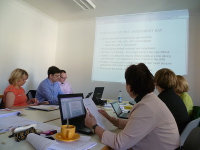
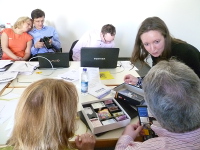
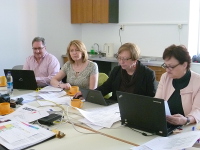
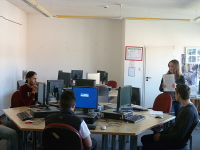
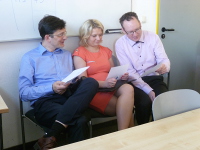
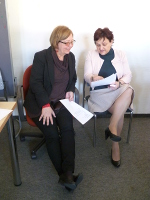
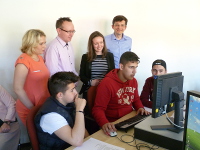
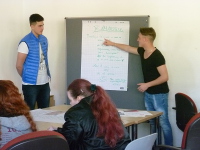
The third international consultation of the project took place between 13-16 April 2015 at ETC centre in Munich. The meeting primarily concentrated on the subject of sharing the information from the first practical experiences, related to the instruments used for measuring the capabilities of those young people acting as a target group.
The Scottish partners presented their instrument The Journey to EmploymenT (JET) Framework containing widely tested and easily used sheets on measuring capability. The content of this instrument focuses on the following fields:
- personal circumstances
- emotional capabilities
- attitudes to learning and work
- employability skills
- qualifications, education and training
- experiences and involvement
- career management
- employment
The Scottish partners had pleasure in informing their colleagues that the owners of the program have given the RLG project a free hand to use selected elements of the system. The members of the group have made a joint decision on which parts of questionnaire system would fit their development plans and which component should be used by all the partners.
The Hungarian partners also shared a widely tested and easily used psychology related questionnaire system with the members of the group. This instrument is available in four languages and is entitled in English Strength and Difficulties Questionnaire, SDQ. It is used to measure social competence. Measuring competence and developing the instrument will be done independently by the Hungarian partner, but any participating country will be able to freely use the results - closely fitting the ten content areas of complex entrepreneurial skills.
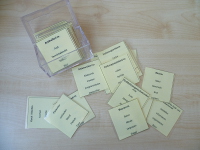
The German partners did most of the practical work in the period preceding the meeting related to measuring existing competences. Based on the huge quantity of development activities experienced by ETC they have selected activities to fit the ten big competence areas of the RLG project and these will be used in the Assessment Day when evaluating the young people's competences.
They gave an overview about the professional dilemmas of the preparatory period which was immediately discussed by the group. As the selected activities have been tested by the young people of ETC in Munich, the participating teachers were able to share a number of significant practical experiences. The work group discussed the applicability of different tasks step by step. The participants have evaluated some of them as being good and requiring no alteration. Some others have been partially modified. A few had to be changed based on joint decisions. The German partners have undertaken the task of finalizing the programme of the assessment day in a few days. As a consequence the Scottish partners could use the finalized results in the Stirling test process which starts soon.
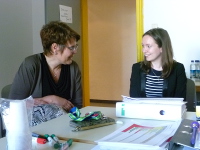
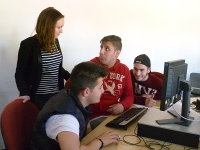
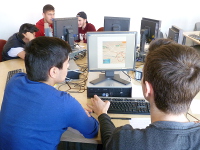
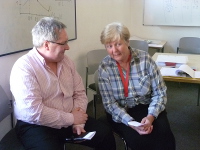
The participants later visited a test group of ETC where they witnessed the young people solving problems related to planning and decision making skills. They had a chance to talk personally with two young people which has provided useful information regarding cooperative thinking.
This work period had an important task: to finalize the fields of responsibility of the educational materials. Fitting the tasks with their former experiences and sharing the roles with each other in the project, the organizations have distributed the fields of competence under development as follows:
Hungary
- willingness to take risk
- interpersonal skills
- decision making
Germany
- strong initiative
- problem solving
- planning and organizing
Scotland
- willingness to learn
- take responsibility
Poland
- adaptability and flexibility
- business thinking and awareness
A coding system has also been agreed which will help identify the single components of the programme by files. The group has decided to commission the Hungarian partners to give a final name to each piece of material.
Various planning templates have also been finalized which will make participation in joint development possible, allowing us to think in the same terms and create pieces of work in the same formats.
The German colleagues presented a board game entitled Business Master, modelled after the widely known board game Monopoly, which aimed at developing entrepreneurial skills and economic-financial knowledge. The game has been developed with the support of local enterprises and made available for secondary school students in Bavaria in German and English languages. The German partners have already tested the board game among young people and it has proved a great success.
During the final period of the meeting the participants thought over what sort of documents they would need in the course of working together with young people. The group has agreed on developing these quickly and putting them in practice:
- making contracts with the participants
- reviews of the programme
- attendance registers
- participants' portfolios
- sheets for self-evaluation
Finally the date of the next meeting was agreed in Cracow, the tasks to be resolved were outlined and the dates of future online workshops confirmed.